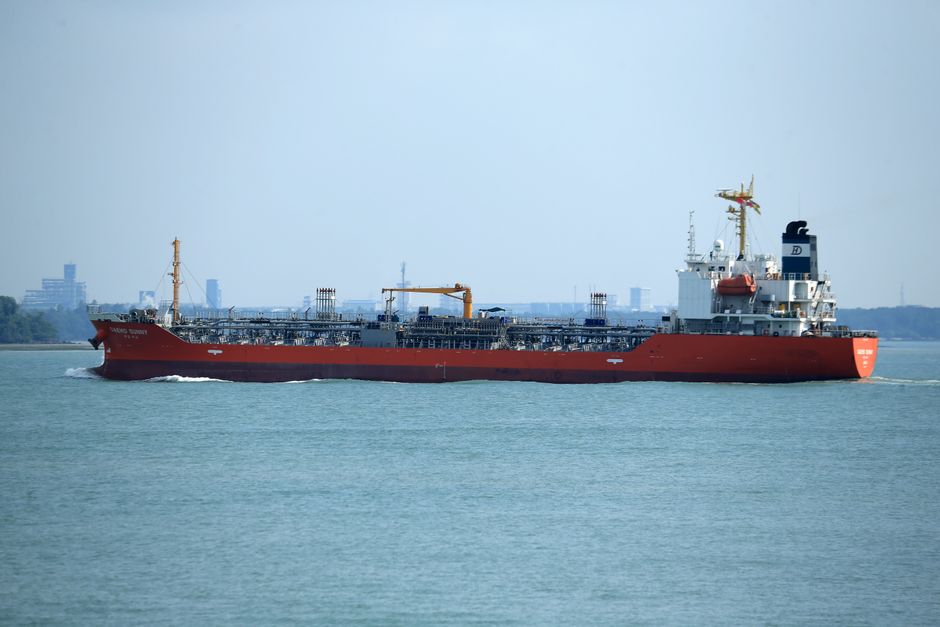
Strait of Hormuz: Iran Draws Clear Lines of Access Amid Escalating War Tensions
Iran is asserting stricter control over the Strait of Hormuz, drawing clear lines for maritime access amid ongoing geopolitical tensions, impacting global shipping and oil trade.

QR Code
Key Highlights
- Iran is increasingly asserting its authority over maritime traffic through the Strait of Hormuz.
- Recent incidents underscore Tehran's resolve to enforce new access protocols amid regional conflict.
- The Strait, a vital artery for global energy supply, faces heightened risks of disruption.
The Strait of Hormuz, a narrow waterway separating the Persian Gulf from the Gulf of Oman, has once again become a focal point of international concern. As geopolitical tensions escalate in the region, Iran is drawing clearer, more assertive lines regarding which vessels can traverse this critical maritime chokepoint and under what conditions.
This heightened scrutiny comes amidst a backdrop of ongoing conflict and a desire by Tehran to demonstrate its sovereign power over a passage it considers integral to its national security. The implications for global shipping, particularly the vast quantities of oil and gas that transit these waters daily, are profound.
Iran's Assertive Posture on Maritime Access
Recent reports indicate a more aggressive stance from Iran's naval forces. Vessels attempting passage without explicit Iranian permission or adherence to newly asserted protocols are reportedly being challenged or even turned back. This marks a significant departure from the principle of 'transit passage' under international law, which allows for unimpeded navigation through straits used for international navigation.
One such incident involved a Pakistan-bound ship that was reportedly turned back for lacking the necessary permission to navigate through the Strait. Such actions signal a clear intent from Tehran to dictate terms for access, raising alarm bells among international maritime bodies and trade partners.
The Critical Role of the Strait
The Strait of Hormuz is undeniably one of the world's most strategically important chokepoints. Approximately one-fifth of the world's total petroleum consumption, and a significant portion of its liquefied natural gas (LNG), passes through this narrow channel. Any disruption here sends immediate ripples across global energy markets, impacting prices and supply chains.
For nations heavily reliant on energy imports, like India, securing safe passage through the Strait is paramount. India, for instance, has reportedly flagged 22 LNG tankers for urgent passage amid the deepening Hormuz crisis, with its Navy bolstering escort operations to ensure the safety of its vessels.
Diplomatic Engagements and Exceptions
While Iran maintains a firm posture, there appear to be specific diplomatic channels and exceptions. There have been instances where certain nations' flagged vessels have received clearance. Vews News previously reported on Iran reportedly greenlighting India-flagged vessels through the Strait of Hormuz amid rising tensions, suggesting that bilateral engagements can sometimes circumvent broader restrictions.
Such selective permissions, however, do not diminish the overall sense of uncertainty. They instead highlight the complex and often unpredictable nature of maritime governance in a region fraught with geopolitical rivalries.
International Reactions and Future Outlook
The international community remains watchful, urging Iran to uphold international maritime laws. The United States and its allies have frequently condemned any attempts to impede free navigation, often deploying naval assets to ensure open waterways.
The current situation in the Strait of Hormuz is a delicate balancing act, with Iran asserting its territorial claims against international norms of freedom of navigation. How these lines of access are ultimately defined and enforced will have lasting implications for global trade and regional stability.
🗣️ Share Your Opinion!
What do you believe is the most effective way to ensure stable and predictable maritime transit through the Strait of Hormuz during periods of heightened regional conflict? Let us know your thoughts.
Stay tuned to Vews News for the latest developments on this evolving situation.
What's Your Reaction?
Like
0
Dislike
0
Love
0
Funny
0
Wow
0
Sad
0
Angry
0
Dark Stories is a vews.in author sharing true tales that explore life’s darker sides—stories of struggle, mystery, and human depth that leave a lasting impact.

Related Posts
Security Check
Please complete the captcha to verify you are human.
38°C Bahraich
Comments (0)